Your website and bidder experience
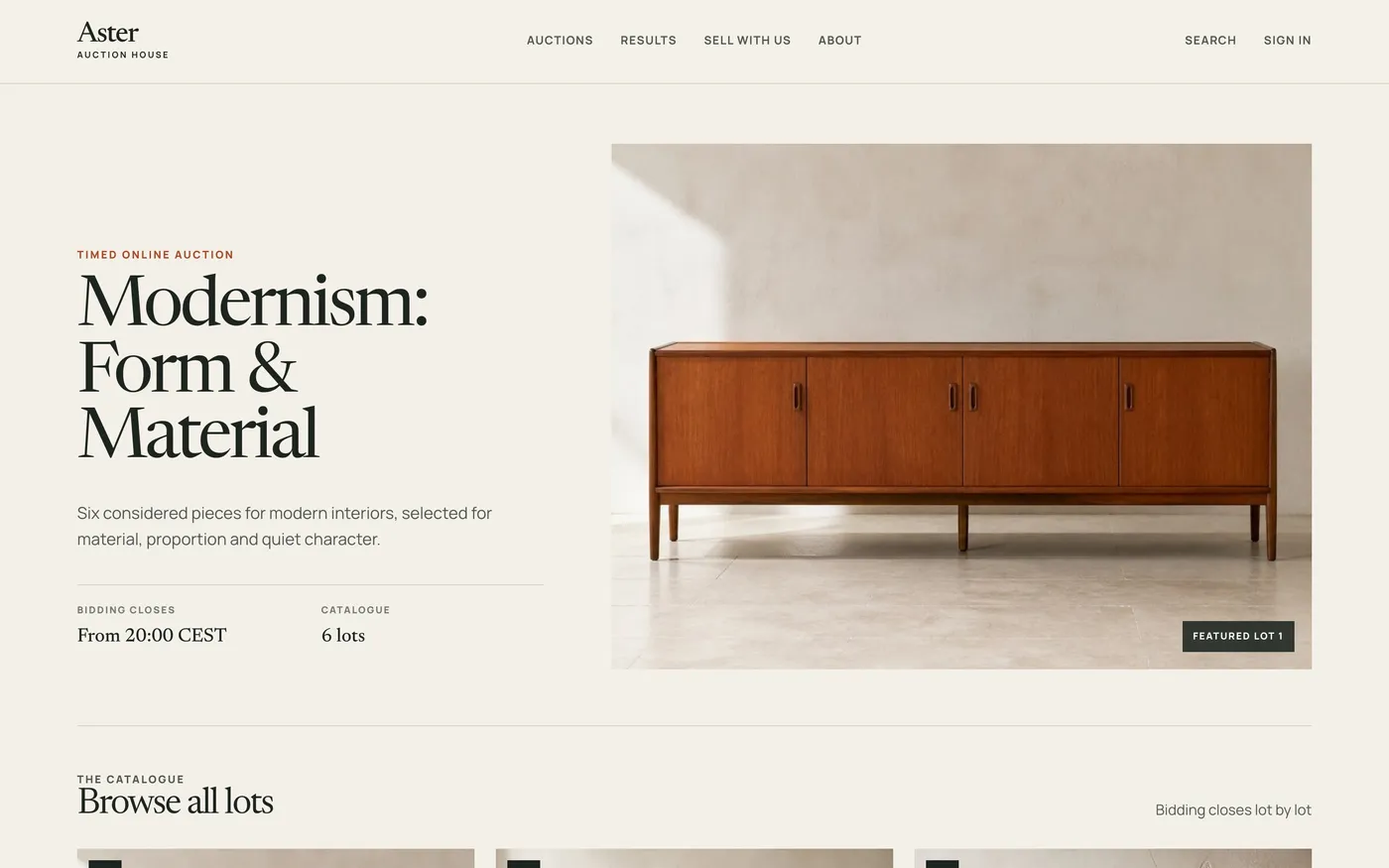
Your Bidvise website is the public side of the same workspace your team uses to prepare the auction. It runs on your own domain and presents the auction house under its own name, rather than sending bidders to a separate Bidvise marketplace.
Your catalogue on your domain
An auction and its sessions stay private while your team prepares them. When you make the sale public, its catalogue and lot information become available to the website from the same records in the backoffice.
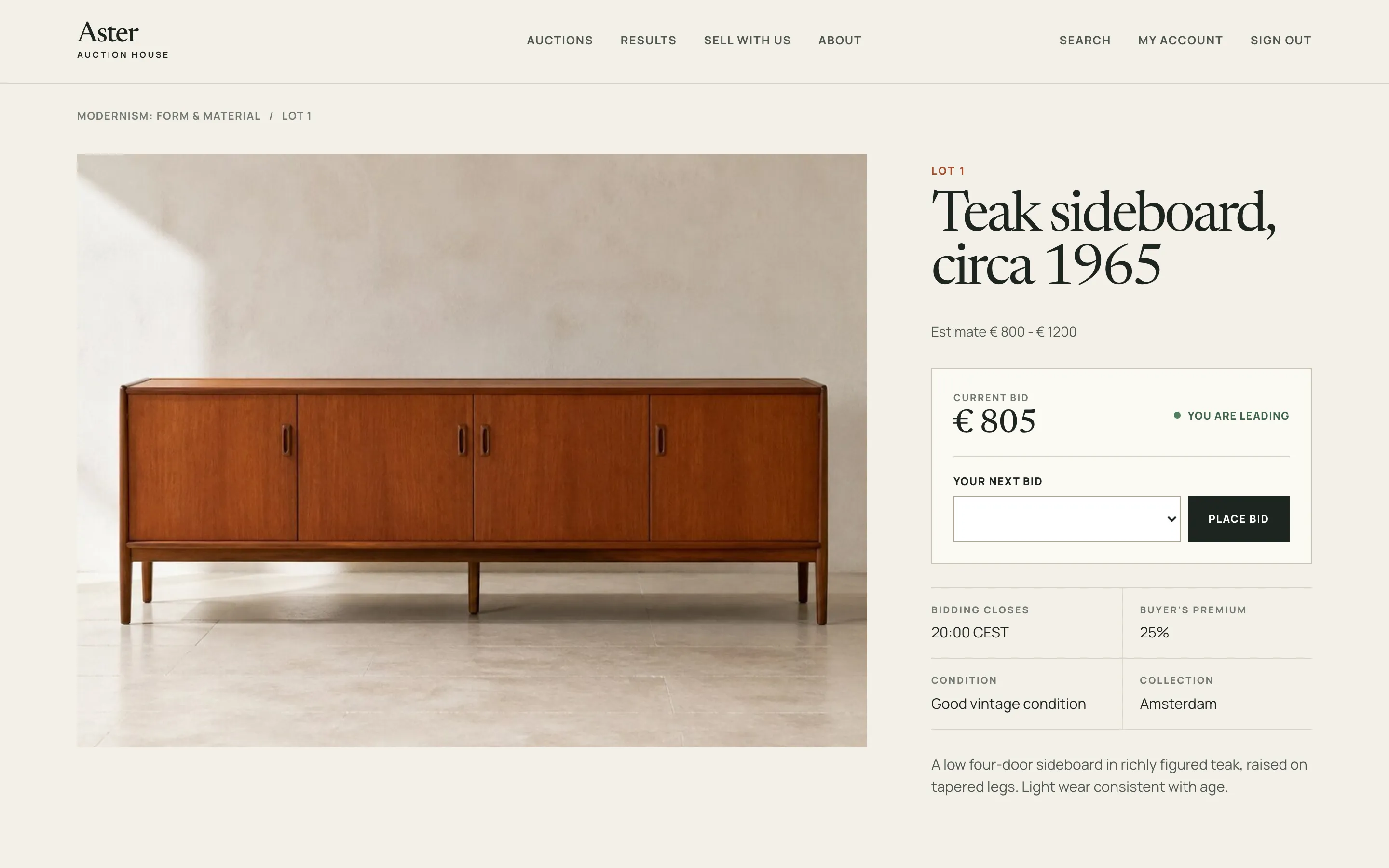
That includes the lot number, photographs, description, estimate, bidding schedule and the information your bidders need around collection or delivery. If you correct a catalogue entry, you correct the underlying record instead of maintaining a second web catalogue.
Before publishing, preview the sale and check the things that matter publicly: session dates, lot order, images, estimates, buyer’s premium, bidding conditions and contact information.
Pages and house information
The website can contain more than catalogues. Use regular pages for information such as your auction house, valuation days, buying and selling, collection, privacy and conditions of sale. News and other structured content can sit alongside those pages, and forms can send enquiries into the backoffice.
The exact design is set up for the auction house. Its domain, logo, navigation and page structure belong to that site, while Bidvise supplies the catalogue and account data behind it.
Bidder accounts
Bidders create an account on the auction house’s website and confirm their email address. From there they can complete their details, follow lots and place online bids when the auction permits it. Their account also connects the public website to the buyer administration in the backoffice.
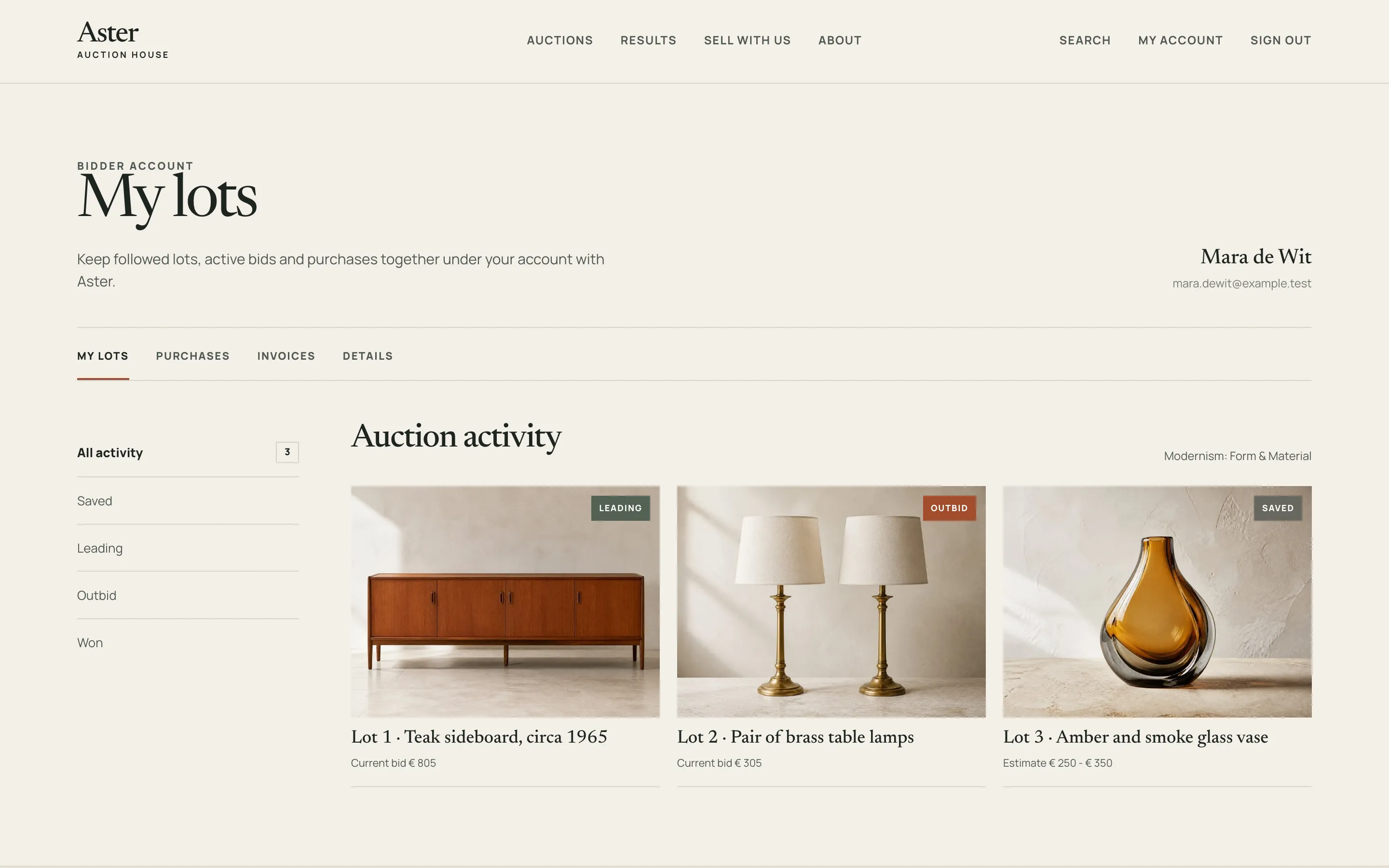
Depending on the site’s setup, a signed-in bidder can return to followed lots, current bids, purchases and invoices without leaving the auction house’s domain. If paddles are required for a sale, registration is tied to the same customer record.
Keeping the site current
The catalogue is not a separate publishing project. The auction team remains responsible for reviewing and publishing the sale, but changes begin with the same auction, session, item and lot records used by the rest of Bidvise. That keeps the public presentation and the administration connected as the sale changes.